Sherborne Abbey Choir — golden Abbey sketch and crest

The Chorister’s Weekly

Sunday 4 October 2026 · Eighteenth Sunday after Trinity

“Forsaking what lies behind and reaching out to what is before…” — Collect for the Eighteenth Sunday after Trinity

A vineyard is planted; its tenants keep the harvest; a rejected stone becomes the cornerstone. This Sunday’s Gospel asks what we do with what has been entrusted to us. The music gives us its own picture of shared work: Mozart’s solo line rises above the choir, Séverac’s Latin asks us to shape a phrase together, and Bairstow sends the canticles forward with bright, confident energy. Come to the music with open ears: notice who leads, who answers, and how each part makes room for the others.

A thought about welcoming new singers

Listening from the outside

Marina Fogle writes about joining a choir of school mothers and feeling like the one person who could not sing. Her account turns rehearsal around: what does a choir feel like to someone who is still finding their voice? A clear welcome, patient listening and a part everyone can hold can make all the difference.

With thanks to The Times: “I joined a choir — and was the only one who couldn’t sing” (a Times subscription may be required).

This Week in the Church’s Year

A vineyard entrusted to us

Isaiah sings of a carefully tended vineyard that yields injustice instead of good fruit. In Matthew, Jesus takes up the same image: the tenants reject the owner’s messengers and son, and the rejected stone becomes the cornerstone. Together, the readings ask what fruit should come from what has been entrusted to us—and what it means to serve rather than possess.

Listen and wonder: what might “good fruit” look like in the places where we sing, learn and serve?

Calendar note: 4 October is the Lesser Festival of Francis of Assisi and closes the Church of England’s Season of Creation. The Sunday’s usual colour is green; white is used if Francis’s festival is observed.

Marten van Valckenborch’s autumn landscape depicting the parable of the wicked husbandmen
Marten I. van Valckenborch, Parable of the Wicked Husbandmen (October), c. 1580–90. Public domain. Image: Wikimedia Commons · Kunsthistorisches Museum, Vienna

Van Valckenborch places the parable in an autumn landscape and titles it for October, bringing the harvest into view. The vineyard is a gift entrusted to others; the story presses us to consider the fruit their care—or refusal to care—will produce.

Readings: select a reference to open it (NRSVue): ; .

Sources: Sherborne Abbey pewsheet, 4 October 2026 · Common Worship: Francis of Assisi · Common Worship colours

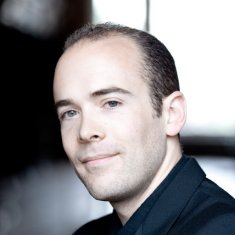
Portrait of composer Matthew O’Donovan

Portrait from Stile Antico’s biography, via Bach Cantatas.

Composer of the Week

Matthew O’Donovan

Matthew O’Donovan is a composer, bass singer, teacher and musical writer whose career brings together scholarship, church music and the discipline of ensemble singing. Sherborne Abbey describes him as living and working in Eton, and the Abbey Choir recorded his Missa Brevis in 2023. He sang with the conductorless ensemble Stile Antico, where every performer has to listen, breathe and shape the music together; he also wrote booklet essays that explain difficult Renaissance music with unusual clarity. That combination—careful thinking and alert teamwork—helps us enter the Mass. The Abbey hears both a contemporary harmonic language and echoes of French music from the first half of the twentieth century: old liturgical words clothed in fresh colours. O’Donovan’s interest in the meeting of faith and music matters here too. Sing the Latin as living prayer, not as a museum piece, and listen sideways: each chord brightens only when every line leaves room for the others.

Checked against the Abbey’s note on the Missa Brevis and Stile Antico’s archive.

Musical Margins

Clues from this week’s scores

Here are a few details to spot as you follow each score. Technical facts come from the linked score or named edition; where no public score is available, the note says so.

9.30am Sung Eucharist

Sung EucharistMassAnthems

Hymns: 360, 393, 456, 420. The official list gives numbers only; use the Abbey hymnbook and rehearsal markings rather than guessing titles or tunes.

6.00pm Choral Evensong

EvensongPsalmCanticles

Hymns: 403 (512), 392. Have the numbers ready in the Abbey hymnbook.

Programme source: Sherborne Abbey Music List, October 2026, checked 3 October 2026. It confirms Bairstow in D, Rachmaninov’s Hymn of the Cherubim, Bach’s Prelude in G and Stanford’s Postlude in D minor. Recordings are free public examples; performers, pronunciation, pitch or edition may differ from the Abbey choir copy.

Chorister’s Challenge

Chorister’s Challenge

Fourteen interlocking answers from the readings, composers and music in this issue. Type one letter in each white square, then check, clear or reveal the grid.

123
45
6
7
8
9
10
11
12
13

Across

4. Composer of the chant for Psalm 22. (7)

5. Composer of Laudate Dominum. (6)

7. First word of Séverac’s Eucharistic anthem. (6)

9. Image shared by Isaiah and Sunday’s Gospel. (8)

10. New Testament letter whose words are echoed in the opening Collect quotation. (11)

12. Composer of the canticles in D. (8)

13. Latin word meaning “short” in the Mass title. (6)

Down

1. Composer of Sunday’s Missa Brevis. (8)

2. Composer of the Evensong Responses. (5)

3. Composer of the organ Postlude in D minor. (8)

4. Heavenly beings named in Rachmaninov’s anthem. (8)

6. Composer of the Hymn of the Cherubim. (11)

8. Composer of I will love thee. (9)

11. Composer of the Prelude in G, BWV 541. (4)

Archive

Browse Sundays in the archive calendarChoose a highlighted Sunday to open that week’s edition.

Resources

Find recordings, scores, musical guidance and Faith & Worship topics on the Resources page.

About The Chorister’s Weekly

A weekly guide for Sherborne Abbey’s choristers and their families, bringing together the music, meaning and people behind the services. Each edition includes listening and score links, musical guidance and an interactive Chorister’s Challenge.