The Chorister’s Weekly
Sunday 27 September 2026 · Harvest Festival
Harvest: receiving before possessing
Harvest can look like a display of apples, loaves and marrows, all safely gathered and arranged. This Sunday’s music asks us to listen further back: to rain, soil, patience and work—and to the gift that none of these belongs entirely to us. Victoria’s Mass begins the morning with bright Renaissance polyphony. Greene gives the earth a voice, while Sheeles lifts our eyes from the fields to the “spacious firmament” above them. At Evensong, Psalm 65 and Greene’s anthem return to the same image: the earth visited, watered and made plentiful. The organ music travels from Karg-Elert’s mighty “Now thank we all our God” to Vierne’s racing Toccata. As you sing, notice how thanksgiving changes the sound of a phrase. It is not merely loud happiness. It is attention: to the words, to the conductor, and to what every other voice is giving.
|
This Week in the Church’s Year Harvest: receiving before possessingOn Harvest Festival, Deuteronomy 8.7–18 celebrates a land rich in water and food, then warns Israel to remember God when its life is abundant. In Matthew 21.23–32, leaders challenge Jesus’ authority; he answers with a question and the parable of two sons, asking which one actually did his father’s will. Together, the readings place gratitude beside action: remember the giver, and live the response. The collect asks God to “crown the year” with goodness and asks that its gifts be used for the relief of those in need. Look and think: Where can you hear gratitude becoming action rather than simply a cheerful mood? Bruegel made this broad harvest scene for a cycle of paintings on the seasons, commissioned by the Antwerp merchant Nicolaes Jonghelinck. Workers rest and eat beneath a tree while others reap; the landscape fills the view around them. It offers a fitting companion to Deuteronomy’s warning: abundance depends on the land and on shared labour, and should call us to remember its giver rather than claim it as our own. Readings (WEB British Edition): ·
Sources: Abbey pewsheet, 27 September 2026 · Church of England: The Agricultural Year · The Metropolitan Museum of Art: The Harvesters. |
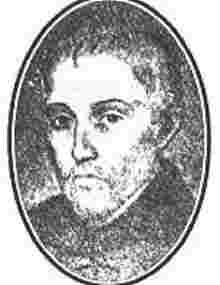 Anonymous historical portrait; public-domain image via Wikimedia Commons. |
Composer of the Week Tomás Luis de VictoriaTomás Luis de Victoria (1548–1611) grew up in Ávila, where he sang as a cathedral chorister, then spent about twenty years studying, composing and directing music in Rome. He became a priest and worked at institutions linked with the energetic Catholic renewal of the later sixteenth century. Around 1587 he returned to Spain as chaplain to the Dowager Empress María at the convent of Las Descalzas Reales in Madrid, where a choir of priests and boys was part of daily worship. Victoria wrote almost entirely sacred music, and that focus helps explain its intensity: these pieces were made for prayer, not simply display. Missa O quam gloriosum, printed in 1583, reuses ideas from his joyful 1572 motet. Listen for imitation—one voice begins a phrase and another receives it. Your task is beautifully double: sing your own line with confidence, while allowing every new entry to change the colour of the whole choir. |

Musical Margins Clues from this week’s scoresA few things to notice with your eyes—and then hear with your ears. | |||
|
| ||
|
| ||
|
| ||
|
| ||
|
| ||
| Score facts are limited to what the checked editions support. Follow any different markings, breaths and pronunciation in the Abbey choir copy. | |||
9.30am Sung Eucharist
Tomás Luis de Victoria — Missa O quam gloriosum
A four-part Renaissance setting of the Mass ordinary. O quam gloriosum means “O how glorious”; the music grows from Victoria’s 1572 motet. Listen for: one voice offering a phrase and another taking it up without breaking the shared pulse.
Follow the sung score — Monteverdi Choir/Gardiner, Agnus Dei (11:43) Alternative performance — Zurich Boys’ Choir Printable score — IMSLP
Practice video omits the Credo; its displayed score is transposed down a minor third. Follow the Abbey copy for pitch and edition.
Maurice Greene — Thou visitest the earth
A short Harvest anthem drawn from Psalm 65. A tenor solo leads into the full choir, praising God for blessing the earth and “crowning the year” with goodness. Listen for: repeated phrases gathering confidence as the texture grows.
Listen — sung choral performance
John Sheeles — The spacious firmament
Joseph Addison’s 1712 poem treats the starry sky as a silent proclamation of its maker. Sheeles’s tune is often called LONDON or ADDISON’S. Listen for: long lines that need clear word-stress without losing their sweep.
Listen — Trinity College Choir
Hymns — 263 (omit *), 262, 287, 261
The dated pewsheet gives numbers only; use the Abbey hymnbook and the Director of Music’s markings rather than guessing titles or versions.
Sigfrid Karg-Elert — Nun danket alle Gott, Op. 65 No. 59
The German title means “Now thank we all our God”. Karg-Elert turns the chorale into a triumphant organ march. Listen for: the hymn tune standing firm while brilliant scales, accents and changing manuals make it blaze.
Listen — David Briggs, organ
6.00pm Choral Evensong
Henry Loosemore — O Lord, increase our faith
A compact seventeenth-century prayer asking for faith, wisdom, charity and patience. The work was once attributed to Orlando Gibbons; the Abbey pewsheet names Loosemore. Listen for: overlapping petitions that still feel like one unbroken prayer.
Listen — King’s College Choir
Richard Ayleward — Preces and Responses
Short prayers pass between officiant and choir. Prepare each answer while the officiant is still singing: the first sound should be together, clear and calm. Preces simply means prayers or requests.
Listen — St John’s College Choir
Psalm 65 — chant by Buck
The psalm begins in Zion and ends with valleys shouting for joy. Its images of watered earth, grain and plenty explain why it belongs so naturally at Harvest. Listen for: how the pointing lets speech-rhythm remain clear inside the chant.
Recording details — Peterborough Cathedral Choir, Havergal chant
The previously linked free video is unavailable. The publisher lists a recording using Havergal’s chant, not the advertised Buck setting. No working free recording of the Buck setting has been verified; use the Abbey choir copy.
Charles Villiers Stanford — Magnificat and Nunc dimittis in B flat, Op. 10
Stanford’s 1879 evening service sets Mary’s song and Simeon’s farewell with warm Romantic harmony and an active organ part. Listen for: the Magnificat’s forward confidence and the gentler change of light in the Nunc dimittis before the Glorias.
Listen — Durham Cathedral Choir
Maurice Greene — Thou visitest the earth
The morning anthem returns after the complete psalm from which its words are taken. Listen for: whether “crownest the year” feels different now that the choir has sung the psalm’s wider journey from prayer to abundance.
Listen again — sung choral performance
Hymns — 436, 262
Let the psalm’s gratitude carry into the congregation’s singing: alert consonants, supported phrases and an ear for the people around you.
Louis Vierne — Toccata in B-flat minor, Op. 53 No. 6
The final movement of Vierne’s second Pièces de fantaisie suite is a brilliant organ toccata. Listen for: streams of semiquavers rushing above a longer bass architecture; the excitement comes from direction, not from blur.
Listen — exact work, organ performance
Programme source: Sherborne Abbey pewsheet for 27 September 2026. It supersedes the earlier monthly list: Karg-Elert is the Eucharist voluntary and Vierne the Evensong voluntary. Recordings are free public examples by other performers; pitch, editions and chant may differ from the Abbey choir copies. The Psalm link is explicitly not Buck’s chant.
Chorister’s Challenge
A 15 × 15 interlocking crossword. Type into the white squares; every answer appears in this issue.
0 of 96 squares filled
Across1. What Harvest gives for the year’s gifts. (6) 4. Composer of the evening service in B flat. (8) 5. English word behind the Latin title Missa. (4) 7. The Magnificat and Nunc dimittis together. (9) 11. Composer of the Evensong introit. (9) 13. Composer of the Evensong Toccata. (6) 16. The sky or heavens in Addison’s poem. (9) | Down2. Composer of the morning chorale improvisation. (9) 3. A biblical song; this week’s is number 65. (5) 6. Composer of The spacious firmament. (7) 8. Composer of the Preces and Responses. (8) 9. Final word in the title of Victoria’s Mass. (9) 10. The season after which this Sunday is numbered. (7) 12. Composer whose Harvest anthem is sung twice. (6) 14. What Greene’s anthem says God visits. (5) 15. What softens the earth before harvest. (4) |
Answer sheet
Sources: dated Sherborne Abbey pewsheet; Church of England Common Worship; checked public-domain scores and publisher records; public-domain Victoria portrait via Wikimedia Commons. Recording links are for listening, not substitutes for the Abbey’s editions or directions.