Sunday 20 September 2026 · Sixteenth Sunday after Trinity
Generosity beyond keeping score
Imagine working hard all day, then seeing someone who arrived at the last minute receive the same reward. Would you call that fair? Jesus’s parable of the workers in the vineyard asks us to think beyond keeping score. The music this week gives us another way into generosity: Palestrina’s voices make room for one another, Tallis asks for light, and Duruflé reminds us that God is present where there is love. At Evensong, Brahms offers a prayer of trust when tomorrow feels uncertain. You’ll also meet last Sunday’s thirsty deer again, this time in Palestrina’s Latin. As you sing, think about what you contribute—and what becomes possible when everyone listens.
A thought about opportunity
How a choir can open a door
At St John the Divine in Kennington, a youth choral programme has helped young singers reach leading choir schools and scholarships. The Guardian reports that about 1,000 children have passed through its choirs since 2013; seven-year-old N’raeah is the latest to win a fully funded place at St Paul’s. The story asks what can grow when children are given the chance, time and encouragement to sing.
The Guardian follows the youth choir programme at St John the Divine in Kennington, where seven-year-old N’raeah won a fully funded place at St Paul’s Cathedral School. She was the fourth singer from the church’s programme in recent years to gain a scholarship; other former choristers have gone on to Westminster Abbey, King’s College Cambridge and St John’s College Cambridge.
Since 2013, about 1,000 children have taken part. The programme has tried to make singing possible for local families by, for example, collecting children from nearby schools and providing snacks before rehearsal. The article sets those practical choices against the loss of specialist music teachers in local primary schools and the barriers that can make classical music seem out of reach.
N’raeah’s advice to children who feel shy is simple: don’t be scared; singing is enjoyable. Her story shows how a choir can offer much more than a chance to perform: it can build confidence, open doors and help children imagine themselves in places they might once have thought were not for them.
Today is the Sixteenth Sunday after Trinity. The Abbey pewsheet gives Philippians 1.21–end and Matthew 20.1–16. Writing from confinement, Paul weighs life and death, then chooses to remain so the Philippians may grow in faith and joy. In Jesus’s parable, a vineyard owner pays the same daily wage to those hired early and late, ending with the unsettling reversal: “the last will be first, and the first last.” Together, the readings set service beside grace and ask what happens when generosity unsettles our sense of fairness. At Evensong, Psalm 104.1–10 and 24–31 widens the view to the abundance of creation.
Abbey connection: In Palestrina’s music, several independent lines become one act of worship. You need to know your own part and leave space for the others. That is a musical skill—and a good habit beyond the choir stalls.
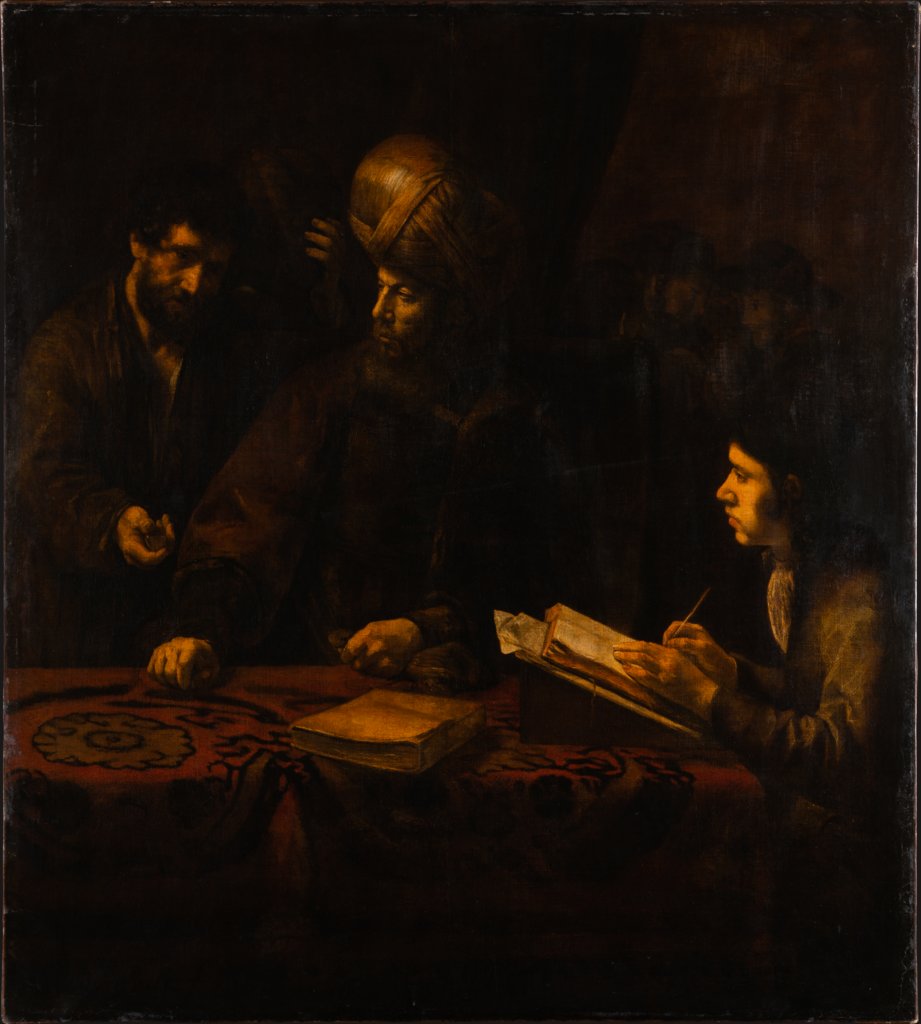
Look and think: When someone else receives the same reward after beginning later, can you see the owner’s generosity—or only the difference in hours worked?
Circle of Ferdinand Bol, Parable of the Workers in the Vineyard, c. 1650–1660. Oil on canvas. Städel Museum, Frankfurt; public domain.
The Städel dates this painting to about 1650–60 and attributes it to Bol’s circle. Its dark interior draws the eye to the payment and the faces gathered around it. That close, watchful arrangement makes the parable’s tension visible: the workers measure the gift against one another, while the owner’s generosity resists being reduced to a calculation.
Read the Abbey’s lessons in full (World English Bible British Edition):
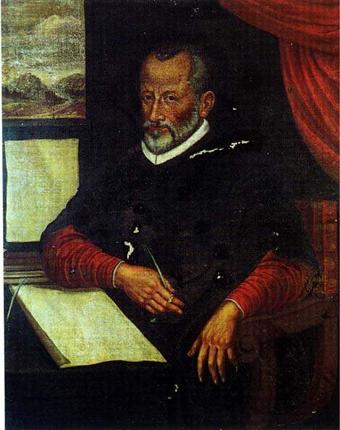
Giovanni Pierluigi da Palestrina (c.1525–1594) took the name by which we know him from his birthplace, a town east of Rome. He moved to Rome as a child, studied music there and became a leading composer of the Renaissance. In 1551 he was appointed to direct the Cappella Giulia at St Peter’s. He later worked at St John Lateran and Santa Maria Maggiore before returning to St Peter’s in 1571. His large output of Masses and motets made him a lasting model for church composers. Yet his music is more than a clever exercise. In Sicut cervus, each voice has a melody worth singing, while the overlapping lines express a shared longing for God. This is polyphony: several distinct musical lines sounding together. It asks for confidence without shouting, and independence without ignoring your neighbours. You will hear that balance in both his Mass and his motet this morning. Try following one voice through a recording; then listen again for the whole choir. Which details become clearer when you change your focus?
Imitation: one voice introduces an idea, then another follows with a similar shape. Mark your first entry in the score. Which voice gives you a cue, and how many beats must you count before joining?
Homophony: the voices often move together in chords. Compare this with Palestrina’s overlapping lines. Find one shared consonant and one phrase ending; make both happen together without clipping the vowels.
Plainchant: an old melody lies beneath this twentieth-century motet. Trace the rise and fall of the opening tune. Long phrases need planned breaths; pencil in the breaths agreed by your director.
A title is a clue: explore G mixolydian, using F natural rather than the F sharp of G major. Play G–A–B–C–D–E–F–G, then compare the key signature and accidentals in your choir copy.
Canon: a melody is followed by another voice according to a rule. Brahms pairs soprano with tenor and alto with bass. Find the paired entries, count the rests and keep your own line secure while the other voice follows.
Fugue subject: a musical idea returns in different voices. Listen to the fugue after the prelude in the linked recording. How many entries can you spot before the texture becomes too busy to count?
Try these ideas with the music in front of you. Follow the markings and breaths agreed by your director.
9.30am Sung Eucharist
Giovanni Pierluigi da Palestrina — Missa Aeterna Christi munera The Mass brings several flowing vocal lines together around the words of worship. Listen for: each voice joining the prayer in the Kyrie. During the service, notice the different character of the Gloria and Agnus Dei. Listen — Oxford Camerata · Follow the score — Kyrie
Giovanni Pierluigi da Palestrina — Sicut cervus As a deer longs for water, the soul longs for God. These are the opening words of Psalm 42—the same image you met in Howells’s Like as the hart last Sunday. Listen for: the overlapping entries. How can the same image of a thirsty deer inspire such different music? Listen — VOCES8
Thomas Tallis — O nata lux The title means “O light born of light”. The words address Jesus as redeemer and ask to belong to his body. Listen for: the voices moving together and the warmth created by the changing chords. Listen — Cor Mundi Chamber Choir
Maurice Duruflé — Ubi caritas Where charity and love are, God is there: the opening idea gives the whole motet its purpose. Duruflé weaves a Gregorian melody into rich choral harmony. Listen for: how the lower voices begin, and what changes when the upper voices join. Listen — Wishful Singing and VOCES8 Scholars
Hymns — 271, 272, 310, 333 Have your hymnbook ready and read the words before the first note. The programme gives numbers; titles should be checked against the Abbey’s hymnbook.
Charles-Marie Widor — Adagio from Symphony No. 5 A quiet organ movement gives the morning a reflective ending. Listen for: the melody, the sustained accompaniment and the way the organ can breathe through changes of colour. This is the Adagio from the fifth symphony. Listen — Symphony No. 5, IV. Adagio
6.00pm Choral Evensong
William Henry Harris — Holy is the true light This short introit looks towards the radiance and peace promised by Christ. Listen for: the spacing of the chords and the final Alleluias disappearing into the building’s resonance. Listen — Choir of Westminster Abbey
Thomas Tomkins — Preces and Responses The officiant and choir take turns in short prayers. Listen for: the exchange between officiant and choir. A clear response begins before you sing, when you count, breathe and watch. Listen — Trinity College Choir, Cambridge Full Choral Evensong, 12 May 2024: Tomkins’s Preces and Responses are sung during the service. Follow the Abbey choir copy for your edition.
Psalm 104:1–10 and 24–31 — chants by Howes and Martin The psalm celebrates creation: light, water, mountains and living creatures. The selection moves from God’s ordering of the world to its astonishing variety. Read the selected verses aloud, then follow the pointing so the meaning survives the chant. Read Psalm 104 — modern translation Use the Abbey’s choir copy for its pointing and the advertised chants.
Francis Jackson — Magnificat and Nunc dimittis in G Mary praises God’s transforming power; Simeon recognises the light promised to all people. Listen for: the different opening moods, then the Gloria in each canticle. Jackson’s Evening Service in G dates from 1952 and uses lively imitation as well as chordal writing. Listen to both canticles — Wantage Parish Church Choir
Johannes Brahms — Geistliches Lied, Op. 30 The German words ask us to be calm, stand firm and trust God rather than be consumed by tomorrow’s worries. Beneath that calm lies a double canon: pairs of voices follow one another. Listen for: the closing Amen, where the prayer opens out. Listen — Chorwerk Ruhr
Hymns — 206, 434 Carry the same care for words and shared phrase endings into the hymns. Follow your director’s choice of pace and breathing.
J. S. Bach — Fugue in C major, BWV 545 Last Sunday’s programme gave the prelude from this work; today brings the fugue. One subject passes through different voices and grows into a larger structure. Listen for: the subject returning beneath another moving line. Can you still recognise its shape? Listen — Netherlands Bach Society, Bart Jacobs The recording contains both prelude and fugue: continue to the fugue after the prelude.
Programme source: Abbey September music list. Music programme checked against the published September list and dated Abbey pewsheet. The listening links lead to public performances by other musicians. They are examples to explore alongside the Abbey’s music; follow your own choir copies for editions, arrangements and markings. The dated pewsheet confirms Philippians 1.21–end and Matthew 20.1–16; the pop-ups use the public-domain World English Bible British Edition, whose wording may differ from the service text.
Chorister’s Challenge
A 15 × 15 crossword. Answers come from this week’s music and themes.
1
2
3
4
5
6
7
8
9
10
11
12
13
14
15
16
Across
1. Several distinct musical lines sounding together. (9)
5. Lux is the Latin word for this. (5)
6. Composer of this Sunday’s Ubi caritas (omit the accent). (7)
8. Composer of Holy is the true light. (6)
11. Mary’s song of praise at Evensong. (10)
13. The final word of Brahms’s prayer. (4)
14. An old word for a deer, heard in last week’s Howells title. (4)
15. Composer of Geistliches Lied. (6)
16. A biblical song or prayer; this week’s is number 104. (5)
Down
2. Composer of both this morning’s Mass and Sicut cervus. (10)
3. Composer of this week’s Preces and Responses. (7)
4. Composer of the Adagio from Symphony No. 5. (5)
7. The world and its living things, celebrated in Psalm 104. (8)
9. A word for love suggested by the Latin caritas. (7)
10. Place where the workers labour in Jesus’s parable. (8)
Find recordings, scores, musical guidance and Faith & Worship topics on the Resources page.
About The Chorister’s Weekly
A weekly guide for Sherborne Abbey’s choristers and their families, bringing together the music, meaning and people behind the services. Each edition includes listening and score links, musical guidance and an interactive Chorister’s Challenge.